

Bakers Delight $642K Fair Work Ruling: Is Your Franchise Compliance Ready for 1 July?
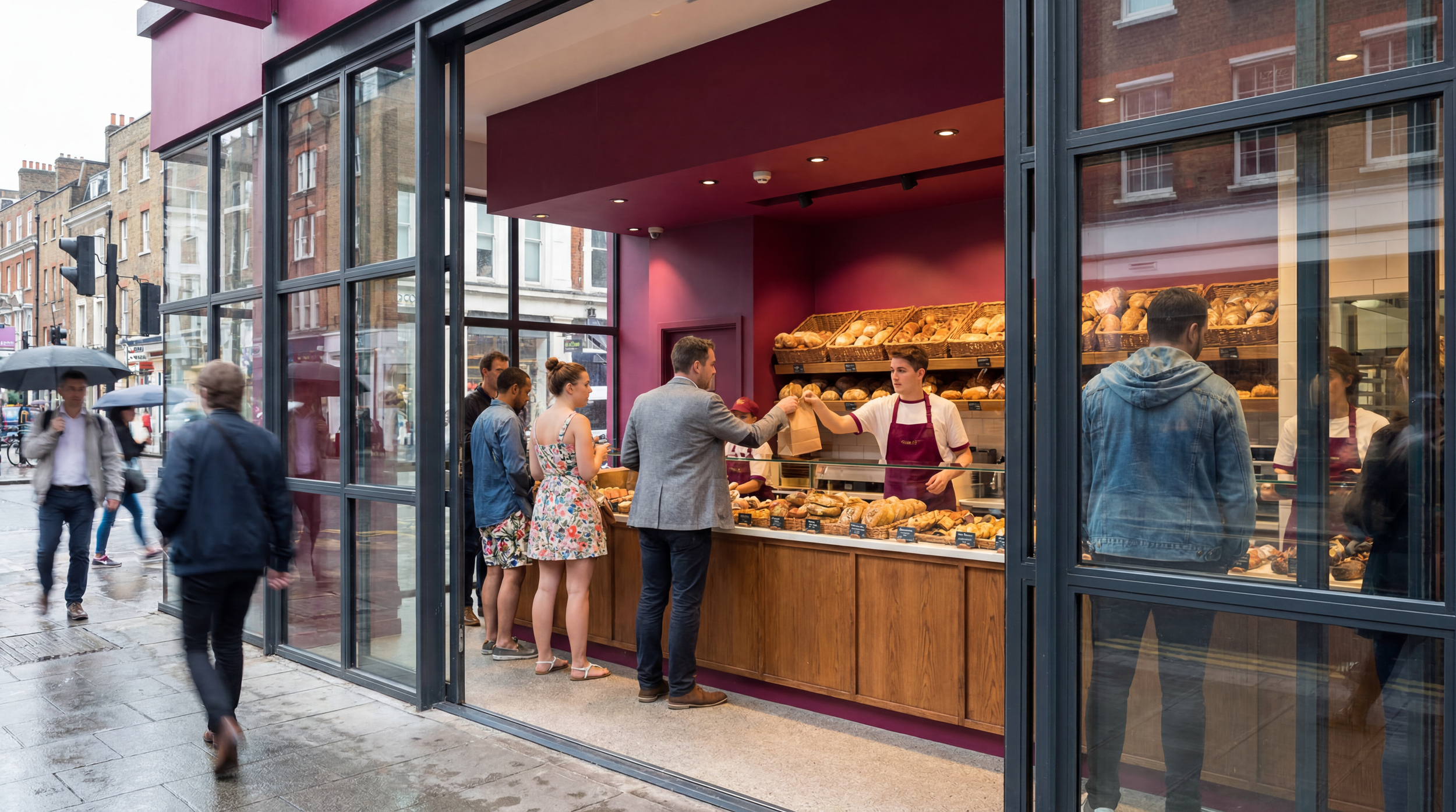
In October 2025, the Full Federal Court handed down a ruling that should stop every franchise operator in the country cold. Bakers Delight, one of Australia's largest bakery franchises, is now potentially liable for around $642,000 in franchisee underpayments, not because head office ran the payroll, but because it didn't do enough once it knew there was a problem.
Head office had actually commissioned an audit, found the underpayments, and told the franchisee to fix it. The court still held that wasn't enough.
If you run a franchise network, that should give you pause. Do you actually know whether every one of your franchisees is paying staff correctly right now?
From 1 July 2026, Payday Super reports every franchisee's payroll to the ATO weekly, employee by employee. Stacked on top of the Bakers Delight ruling, it puts the legal risk for underpayments on your head office, and most of the sector hasn't caught up to it yet.
Bakers Delight: Franchisors are Now Liable by Default
Since October 2025, head office is presumed liable for franchisee underpayments, and has to prove in writing that it took reasonable steps to prevent them.
In 2019, Bakers Delight Holdings commissioned an internal audit of three Hobart stores. It found that 140 staff, most of them young casuals, had been underpaid by a combined $1.25 million between 2014 and 2018. Head office took the findings to the franchisee and told them to fix it. The franchisee didn't.
When the Fair Work Ombudsman took it to court, it didn't only pursue the franchisee. It went after Bakers Delight Holdings too, under section 558B of the Fair Work Act. That section had been on the books since 2017, but the FWO previously had to prove head office knew about the underpayments and failed to act, and proving knowledge was a bottleneck that let franchisors distance themselves from store-level problems.
In Bakers Delight Holdings Ltd v Fair Work Ombudsman FCAFC 144, the Full Federal Court collapsed that bottleneck. It confirmed the FWO can rely on a reverse onus of proof: once a franchisee underpayment is established, head office is presumed liable unless it can show it took reasonable steps to prevent it.
What should worry you is that Bakers Delight had done what most franchisors would consider the responsible thing, and it still wasn't enough. Knowing about the problem and telling the franchisee, without confirming the fix was made, didn't clear the "reasonable steps" bar. The law hasn't changed. The proof you need in your filing cabinet has.
Payday Super: Every Payroll Mistake is Now Visible in Real Time
From 1 July, every franchisee's payroll is reported to the ATO weekly, employee-by-employee, and late super becomes an automatic contravention the moment it happens.
From 1 July 2026, the quarterly super system every Australian employer has used for decades is gone. Payday Super requires employers to pay super on the same day they pay wages, with contributions reaching the employee's fund within seven business days. Late super stops being something you can quietly square away at quarter's end and becomes an automatic contravention the moment it happens.
There's a quieter shift underneath. From day one, employers must report year-to-date qualifying earnings and super liability for every employee, every payday, and qualifying earnings is a new measure that doesn't map cleanly onto the old one. If you don't remap your pay codes before 1 July, the numbers will be wrong every week. The byproduct is a continuous, employee-level audit trail the ATO, the FWO and the courts can read in real time, often a sharper view of your franchisee sites than your head office has.

This Is One Shift, Not Two
In isolation, neither change is a crisis. Together, they're the biggest shift in franchisor liability since the 2017 reforms. Every misclassified casual at a franchisee's store becomes weekly data a regulator can read, and every short or late super payment becomes a documented contravention the moment it happens. Under reverse onus, if any of it reaches a court, the burden is on your head office to prove what you were doing about it.
Enforcement is tightening to match, with Franchising Code penalties now doubled to $133,200 per breach. Most franchisors still treat franchisee payroll as the franchisee's problem. The Bakers Delight ruling makes that view legally indefensible, and Payday Super removes the time lag that used to make it tolerable.
What to Do Before 1 July
Our team works with franchise networks on compliance every day, and the ones that handle shifts like this well tend to do three things. Here's the minimum version of each.
1. Audit your franchisees' payroll now.
You don't need a forensic audit across every site. Start with the highest-risk locations: high turnover, casual-heavy, multiple awards. But finding a problem and stopping there is the exact pattern that caught Bakers Delight, so an audit only protects you if the follow-through is complete and documented.
🤝The right payroll partner
Getting every store Payday Super-ready comes down to having the right system in place. That's why we partner with PaySauce, the payroll platform we trust with the franchise networks we work with.
2. Document the reasonable steps you're taking.
Reverse onus means your defence is built in advance, not after the fact: training issued to franchisees, payroll requirements written into the franchise agreement, compliance check-ins logged with dates, updates sent every time an award changes. It's not glamorous, but it's what stands between your head office and liability if something goes wrong at a single site.
3. Make sure every franchisee is Payday Super ready.
Each one needs payroll software that can report qualifying earnings through STP and pay super on payday from 1 July. The ATO is asking employers to map pay codes and review STP software now. If any of your franchisees are on outdated systems or running super manually, that's where to start.
This Is an Operating Capability, Not a Legal Problem
Most franchisors are still treating this as a legal problem to solve. It isn't. It's an operating capability to build, and the networks that come through shifts like this well, in my experience, aren't the ones with the best lawyers or the deepest pockets. They move early, bring their franchisees in, and have the documentation ready when the questions come.
For the wider picture on what good legal governance looks like, our recent Franchising Lens piece, Legal Mistakes That Sink a Franchise Before It Scales, walks through the Franchising Code and the employment-liability angle the Bakers Delight ruling has just made unavoidable.
Need Help Getting Your Network Ready for 1 July? Talk to Our Experts.
To help franchisors get ahead of Payday Super and the new liability exposure, our team at DC Strategy is opening up conversations across two areas. Pick the question that's most relevant to where your network sits today.
Do you need to review your franchise agreements for payroll compliance and audit access?

Sophie Pettigrew
Sophie Pettigrew is the Legal Practice Director at DC Strategy Lawyers, with extensive experience in franchise law, compliance, and regulatory updates. She advises franchisors on navigating legal changes, ensuring compliance, and updating agreements.
Do you need strategic consulting for your network, or support building your franchisee recruitment pipeline?

James Young
James Young is the Managing Director of DC Strategy Group and a Certified Franchise Executive (CFE), with deep experience in consulting and franchise development across Australasia. He helps franchisors get ahead of regulatory shifts and build recruitment programs that bring the right operators into the network.